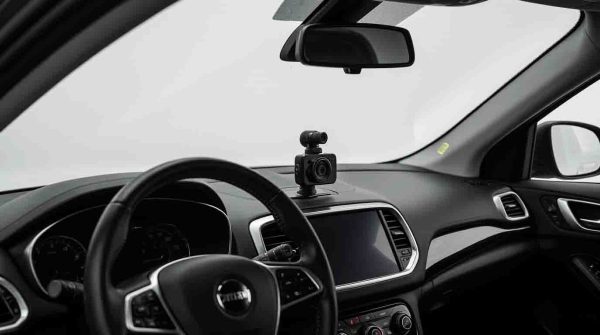
This is the question you should ask yourself the next time it comes down to repairing your car after an accident. For cosmetic problems the choice is obvious: get it fixed. But structural damage may run into the thousands and the repairs may not be up to standards and may cause future problems or the safety of yourself and your family.
How do you know that it is best to repair your car or just total it? Just ask collision expert Chuck Russo at http://www.iwantmycartotaled.com. He has more than 30 years in the body shop business and knows all the right questions you should ask your body shop and insurance company to make sure the repairs are done correctly.
It’s a membership site, but for $40 (pre-launch) it could save you thousands or even get you a new car!
According to the National Highway Traffic Safety Administration (NHTSA), when comparing a automobile to a motorcycle rider the motorcycle rider has a 35 percent greater chance of getting hurt or dying in a automobile accident compared to a driver in a automobile. When wearing a helmet it is less likely that the motorcyclists will receive a serious head injury and more likely to survive the accident according to the The National Highway Traffic Safety Administration.
Safety helmets for motorcycle users are the law in many states, optional in others. Especially so if the helmet is rated for safety and is properly fit to the wearer. Safety is what it’s all about right.
When wearing a motorcycle helmet it will protect your head against the following, it protects your face, your ears and you are able to have an intercom system to talk to others. A helmet protects your head and your face from injuries. There are many different types of helmets ranging from helmets that have a face guard and helmets that have an open face so you can feel the wind on your face, helmets can be customized to your specifications. Looking for full face helmets can be a challenge. On helmets the face shield can retract by lifting up and down.
Because Motorcycles lack the protection of other vehicles, such as a car or truck, severe injury is much more likely. For comfort and protection they generally have fabric and foam interiors. Motorcycle helmets act as a protection device for your head.
When looking at helmets to purchase don’t let the price determine which helmet you will purchase, you will need to look at the protection factor it can provide and how it is rated. When manufacture design a helmet they look at many different factors, one of the factors is how much impact a helmet can receive without hurting the persons head, many helmet manufactures put padding and made the inner side soft while the outer shell is very hard and very difficult to penetrate.
Trying to find a helmet that fits is very important, when looking at helmets try them on and make sure they fit snug and the feel is comfortable. If you are buying a helmet for a child make sure the helmet fits snug and the child can see out of it and the helmet doesn’t turn around while wearing it, if you are buying a used helmet make sure there are no cracks, the padding is in the helmet and the strap still works.
Even if you don’t choose to wear a motorcycle helmet for safety reasons, there are other reasons. When looking for motorcycle helmets there are so many choices and many different designs, colors and visors. Some manufactures match the men’s helmet with the women’s helmet and other accessories.
Safety helmets successfully reduce the chances of head injury to a great extent. For instance, according to the National Highway Traffic Safety Administration has estimated in a report that if you do not wear a helmet there is a 40% chance that the rider will suffer a head injury and a 15% chance of it being a fatal head injury.
David Marc Fishman is the owner of Priceriot. http://www.priceriot.com is an auction site where prices drop as people shop. http://www.tipsquad.com is an Ask an expert video site.
Volvos are known for being extremely safe cars. They are so safe, in fact, that Volvo has started a “Volvo Saved My Life” Club. This club recounts the many moments in which Volvo drivers have been saved by the safety features of these amazing vehicles.
The Volvo v70 and Volvo s70 comes with standard with numerous safety features that you don’t want to miss out on. These safety features may be what put you in Volvo’s special club.
The Volvo line of cars begins with the Safety-Cage Passenger Compartment. This feature is complete with front and rear crumple zones that are able to dissipate and distribute the collision force. This reduces the physical strain on the car’s passengers. There are also roof pillars and transverse roof profiles that would prevent the car caving in should it roll. The side collision impact system also distributes the force of a collision to the side of a car.
The second feature is the Side-Impact Protection System. This reduces injuries in the event of a side impact. The car’s body is designed to reduce the deformation that occurs to a car when hit form the side.
In many front-end collisions, individuals are often harmed by the steering shaft. In a Volvo s70 you will find a collapsible steering column that is designed to prevent the penetration of the steering column into the vehicle’s cabin.
In rear end collisions, whiplash is a common injury. These injuries are created by the catapult effect that occurs when a vehicle is rear-ended. In the event of an accident to the rear of the vehicle, the Whiplash Protection Seating System is activated. There are two phases involved with this feature. The first is a wire frame and the limited-travel spring system. These features prevent your body from being pressed deeply into the seat. The second is a system that allows the seat to actually move backwards and prevent the person from being thrown forwards. This system is designed to work at speeds of up to 20 mph, as this is when whiplash injuries occur the most.
The airbag system on a Volvo is like not other car. There are three-step airbags with a driver’s and passenger side kneepads. A driver and a passenger will often need protection for their knees. Many knee injuries occur in accidents that are front-end collisions. The driver and the front passenger are often thrown forwards in these types of accidents and the knees may be jammed into the lower console.
These are just a few safety features that are found in the Volvo s70 and Volvo v70, but there are many more additional features that may be found in each car as well.
This Article was written by Patrick Kolodziejek who recommends you visit http://www.volvostrader.com s70 v70 parts specialists for more information about Volvo s70 v70 cars and claim your free newsletter.
Hyundai Sonata Review
It’s difficult to imagine, but Hyundai worries that even if it has one of the highest customer faithfullness ratings in the industry, attracting new purchasers into the showroom has been a real challenge. The new Sonata slogan is: “A Hyundai you’ve never seen before” and it is true that the Sonata which was redesigned has more power, more space and better fit and finish than it has ever had previously.
Its Advantages are:
- Acceleration - The possibility to avoid accidents - Comfort and convenience - Gas mileage
There are two acceptable disadvantages:
- Suspension noise - Handling
Reliability and Maintenance
The Sonata is easy to take care of, with very little in the way of programmed maintenance until 100,000 miles is reached, unlike oil changes at regular intervals.
It is backed by one of the longest powertrainn warranties in the automotive industry at 10 years or 100,000 miles.
Performance and Handling
The new Sonata is adequately equipped with a standard 4-cylinder which offers 162HP. The 3.3-liter V6 with 234HP is smooth but responsive and reaches average speed with little effort.
Acceleration is brisk in the four-cylinder and it is surprising in the V6. Hyundai officials say the V6 will turn 0-60 miles per hour times of about 7.5 seconds, with a maximum speed of 130 mph. Shifts are executed easily with the five-speed manual, and the front tires are chirped even more easily. Kicking down for passing with minimal hesitation, the Shiftronic automatic transmission moves between gears smoothly. When the engine bumps up against redline, and it declines to downshift at all, leaving that to the driver’s preferences,in manual mode, the Shiftronic will upshift automatically.
It provides more room and power than previous years. However, there is a least favourite feature, cheap interior look with fewer features, and new external redesign. But let’s see the positive aspects of Hyundai sonata.
Even if the interior seems cheap and bare compared to 2002-2005 models, seats are comfortable and the general aspect is all right for those who prefer simplicity. The on road performance and handling of this car is very good.
The Hyundai Sonata’s new interior marks a major step up the quality ladder. You can notice some rough edges on a few plastic molds and a less-than-lustrous finish on some dash panels. But the overall look is highly competitive with most in the class and better than some.
Three round dials in the hooded instrument cluster communicate the necessities of operational data to the driver, with the largest the speedometer which is positioned inside a polished circle. To its left is the tachometer, and to its right conjoined water temperature and fuel gauges. In the lower dash to the left of the steering column are a bank of five switch plugs, one of them is the dash-light rheostat, and there also can be seen a flip-down storage bin. The ignition key slides into a slot placed properly, in the dash to the right of the steering column instead of on the steering column itself.
Ourisman Maryland Hyundai Dealer offers the best price and service in Maryland, Virginia and DC, something you’d expect from a family doing business in the car industry for 80 years. Visit Ourisman Hyundai now! Are you curious? Visit http://www.ourismanhyundai.com and you’ll be aswered all your questions!
Auto insurance is at its heart financial protection. You purchase insurance in order to prevent paying thousands of dollars in the event of a collision or other loss. Many different types of insurance are available, covering almost every conceivable means of loss or damage to your vehicle as well as others to which you may cause damage. Very few drivers need to purchase every single type of insurance, so it is helpful to understand each type in order to decide which ones you require.
Property damage insurance is sometimes known as liability insurance. This product is designed to cover damages that you may do to someone else’s vehicle. Your state sets a minimum amount of this insurance that you must carry but the state requirement is often quite low. If the damage you cause exceeds the limits of your insurance you could be sued for the difference. It is therefore wise to purchase as much property damage insurance as you can afford.
Personal injury insurance is usually required by law, though the required amount may vary by state. This insurance pays a portion of your medical bills (generally 80 percent) and a portion of your lost wages (usually 60 percent) if you are injured in an accident. Personal injury protection often includes a small death benefit as well. This insurance may cover your relatives or household members or even everyone in the car, depending on your insurance company’s policies and state mandates.
Bodily injury insurance is extremely important even though it is not required by many jurisdictions. If you are at fault for an accident that injures someone beyond the limits of his personal injury coverage, bodily injury insurance will cover the difference. Otherwise you could be sued for medical expenses.
Uninsured/Underinsured Motorist Coverage
If you are injured beyond the limits of your personal injury protection in an accident caused by someone who does not carry bodily injury insurance, what are your options? You could certainly sue him and likely win your case. However lawsuits are time consuming and expensive, and if he does not have the money to pay you might be stuck with an uncollectible judgment against him. Instead, your Uninsured/Underinsured Motorist Coverage could cover your injuries. This protection is reasonably priced and will ensure that you are paid in a timely manner. Purchase this coverage if you can.
Collision insurance will reimburse you for damages to your vehicle if you are at fault. Collision coverage will pay up to the actual cash value of the vehicle less your deductible. If your car is financed you may be required to carry collision insurance. However the premiums are high and this product is not recommended for older low value vehicles.
Comprehensive insurance will pay for damage or loss to your vehicle from both theft and acts of God. Comprehensive coverage will pay up to the actual cash value of the vehicle less your deductible. This insurance is usually required if your car is financed but not recommended for older cars with a low cash value.
Many other options are also available, covering everything from medical payments beyond your personal injury coverage to a rental car while yours is being repaired. Most of these options are good to have if you can afford them but not necessary if you can’t. Always speak with your insurance agent if you have any questions or concerns regarding your coverage options.
Find the best deal on the auto insurance coverage that’s right for you. Visit http://www.AutoInsuranceRatesDirect.com today for free car insurance quotes, money-saving tips and important information about choosing your auto insurance.
Many parents will buy their teenagers their first used car shortly after they turn sixteen. Once mom or dad has helped their teenage driver find a good and reliable used car it is time to find car insurance that won’t cost them an arm and a leg for their new driver. New drivers will typically have higher premiums than older drivers who have more driving experience.
Even though new drivers are considered inexperienced, the premium that you pay doesn’t have to empty your checking account. In fact, parents can save a little bit of money by using their existing insurance policy. Many companies will offer “multi” discounts. This means that if the policyholder has more than one car on their policy, then they will usually get a discount on the additional cars. Other insurance companies will offer auto and home insurance together and this can make paying your insurance even easier. If you are adding a new driver and car to the policy you may receive multi-driver and multi-car discounts.
If the new driver has had a driver education course such as Driver’s Ed in high school, then you may also be able to receive a discount. Many schools offer these courses and if they do not, you may find them available through private companies. You can also take the course and receive a discount for both you and your new driver. Many insurance companies offer these discounts and because many states are requiring that students take these courses, then the situation is even better for you.
Some insurance companies also offer a Good Student discount. These programs award students by offering discounts to students who make good grades in school. If a student also takes a defensive driving course voluntarily, you may also be able to save by sending the certificate to the insurance company, as most insurance companies offer defensive driving discounts as long as the course was not a requirement for a speeding ticket.
Teens have higher accident numbers than any other age of driver. As they progress from being 16 to 17 to 18, their driving gets better as they gain experience. This is why it is important to be prepared for teen car insurance to be more expensive when they first begin driving. They are a higher risk because they tend to be involved in many more accidents. As a parent, you will need to expect to pay that higher premium, but as the teen becomes more experience you can expect that premium to begin dropping on a yearly basis. To make car insurance more affordable for your teen, you should be prepared to budget in that amount when purchasing them a used car.
Car insurance is also a good opportunity for students to learn responsibility. They should be able to help parents pay the premium through summer or part time jobs. They should also learn the effect that a traffic ticket or accident will have on their premium. They will also be able to see how being a good student allows you and them to save money on their insurance.
For more Car buying tips visit Atlanta Used Cars at http://www.UsedCarsAtlanta.us and Dallas Used Cars at http://www.UsedCarsDallas.us.
Kevin Lloyd writes Car buying tips about Atlanta Used Cars at http://www.UsedCarsAtlanta.us and Dallas Used Cars at http://www.UsedCarsDallas.us.
When you have found a car that you are interested in you will want to inspect and test-drive the car that you are considering purchasing. This is the best way to weed out the bad cars from the ones that have potential.
When you evaluate a used car, you will want to keep two main considerations in mind. The first is whether or not you even like the car. Do you like the color? Do you like the interior? Does it have enough headroom and legroom? Secondly, you will want to know if the car is mechanically sound. These two factors will help you decide whether or not you actually like the car. If you do like the car then you will have a few more questions to ask yourself. Will the car work well in the long run? Will it be in good condition in six months or will you begin to have to repair and put money into it? It is important to realize that in many situations you will need to put a certain amount of money into a used car. You cannot typically find a used car that doesn’t need some kind of repair or sprucing up.
While you are test-driving the car, take it to your mechanic. If you are seriously thinking about purchasing the car, you may have doubts as to whether it is mechanically sound. Take the car to your mechanic and have him check it out for you. Many mechanics are more than happy to test drive the car quickly, check for leaks, and do a compression check. Then they will give you their expert opinion and you can make your decision from there. They may tell you that you would need to have something replaced and it would cost you so much. It would then be up to you to make the decision as to whether or not you would be willing to spend the additional money on the car.
Before you drive the car you will want to inspect the car. Walk around it and get a good overall visual inspection. Ensure that there are no ripples in the door panels, as that may suggest that the car has been in an accident. Look for uneven gaps between the doors and along the hood. Check for leaks such as coolant, oil, transmission fluid or gasoline. Examine the area where the car is normally parked to look for spots from leaks. You will then want to open all doors and the trunk. Test the lights, controls, heater, air and radio. Open the hood and look for leaks or sprays. While the engine is running you will want to listen for knock, ticking, hissing or whining. Check to see that all the tires have enough tread left on them.
Once you are driving the car, you first impression should be the way that the car feels. Does it fell comfortable to you? Are the gauges and controls easily accessible? Do you have enough leg space and headroom? If it is possible to drive the car when it is completely cold you will want to do so. Some older used cars may have difficulty starting when they are cold and this will reveal any chronic problems the car may have. Adjust the seat and mirrors before taking off and drive with the radio off. You will want to hear the engine and listen for other noises.
Be certain to include these factors in your test drive:
-Accelerate from a dead stop -Check for blind spots -Listen to the engine noise -Listen for how the car downshifts -Braking -Cornering -Suspensions -Listen for rattles or squeaks -Be sure to get on the highway and get the car up to highway speeds
Following these key points will help you make an accurate assessment of the vehicle before making your decision.
For more Car buying tips visit Atlanta Used Cars at http://www.UsedCarsAtlanta.us and Dallas Used Cars at http://www.UsedCarsDallas.us.
Kevin Lloyd writes Car buying tips about Atlanta Used Cars at http://www.UsedCarsAtlanta.us and Dallas Used Cars at http://www.UsedCarsDallas.us.
A booster seat is a simple concept and it has a very simple function. This simple function is this: it is there to save the life of your child. A car accident is not something that anyone really wants to think about, especially where children are concerned, but to be prepared for the eventuality is one of the best things you can do for the safety of your child.
A booster seat is easily added to a standard automobile, and they are relatively inexpensive. And yet they can save your child’s like or save him or her from serious injury.
But what’s wrong with a normal seat, I hear you ask. After all they have seat belts, which are great life savers. True, they do, and seat belts are a lifesaver. But the problem is that seats are designed with primarily adults in mind. The same goes for seat belts. In fact, using seatbelt on a child can actually be more dangerous than it is effective at protecting the child, since the belt can become entangled with the child and cause injury.
Most injuries to adults are caused by the adult not putting on the seatbelt in the correct way. And since seatbelts are not designed for children, but for adults, then the seatbelt will automatically be put on in the wrong way, putting the child at risk, and possible great risk in the event of a car accident.
All this is why you need a booster seat. These are seats which fit into a normal car seat, and allow the child to sit properly. They allow the seatbelt to be used properly, and they give support to a child’s body. This is essential if there were to be an accident.
So before you even contemplate taking your little one out for a ride in the car, think booster seat. It could be one of the best purchases you ever made for your child.
David Flinthoff writes for http://www.carseatvault.info
Since 1984 Formula One teams have been required to build the chassis in which they compete, and consequently the terms “team” and “constructor” are more or less interchangeable.
This requirement distinguishes the sport from series such as IRL, Champ Cars, and NASCAR, which allow teams to purchase chassis, and “spec series” such as GP2, which require all cars be kept to an identical specification.
In its early years, Formula One teams sometimes also built their engines, though this became less common with the increased involvement of major car manufacturers such as BMW, Mercedes-Benz, Renault, Toyota, and Honda, whose large budgets rendered privately built engines less competitive (and redundant).
Early manufacturer involvement came in the form of a “factory team” (that is, one owned and staffed by a major car company), such as those of Alfa Romeo, Ferrari (FIAT) or Renault. Companies such as Climax, Repco, Cosworth, Hart, Judd and Supertec, which had no direct team affiliation, often sold engines to teams who could not afford to manufacture them. As the manufacturers’ deep pockets and engineering ability took over, almost all engines are now produced by major manufacturers.
After having virtually disappeared by the early 1980s, factory teams made a comeback in the 1990s and 2000s, and now form half the grid with Toyota, Ferrari (FIAT), Honda, Renault and BMW either setting up their own teams or buying out existing ones. Mercedes-Benz (DaimlerChrysler) owns 40% of the McLaren team and manufactures the team’s engines. Commercial engine supplier Cosworth exited the sport at the end of 2006. Thus all the teams will run on factory supplied engines from 2007.
The sport’s 1950 debut season saw eighteen teams compete, but due to high costs many dropped out quickly. In fact, such was the scarcity of competitive cars for much of the first decade of Formula One that Formula Two cars were admitted to fill the grids. Ferrari is the only still-active team which competed in 1950, and as of 2006 eleven teams remain on the grid, each fielding two cars. Although teams rarely disclose information about their budgets, it is estimated that they range from US$66 million to US$400 million each.
Entering a new team in the Formula One World Championship requires a £25 million (about US$47 million) up-front payment to the FIA, which is then repaid to the team over the course of the season. As a consequence, constructors desiring to enter Formula One often prefer to buy an existing team: B.A.R.’s purchase of Tyrrell and Midland’s purchase of Jordan allowed both of these teams to sidestep the large deposit.
Each car is assigned a number. The previous season’s World Drivers’ Champion is designated number 1, with his teammate given number 2. Numbers are then assigned according to each team’s position in the previous season’s World Constructors’ Championship. There have been exceptions to this rule, such as in 1993 and 1994, when the current World Drivers’ Champion (Nigel Mansell and Alain Prost, respectively) was no longer competing in Formula One. In this case the drivers for the team of the previous year’s champion are given numbers 0 (Damon Hill, on both occasions) and 2 (Prost himself and Ayrton Senna - replaced after his death by David Coulthard and occasionally Nigel Mansell - respectively). The number 13 has not been used since 1974, before which it was occasionally assigned at the discretion of individual race organizers.
Before 1996, only the world championship winning driver and his team generally swapped numbers with the previous champion – the remainder held their numbers from prior years, as they had been originally set at the start of the 1974 season. For many years, for example, Ferrari held numbers 27 & 28, regardless of their finishing position in the world championship. As privateer teams quickly folded in the early 1990s, numbers were frequently shuffled around, until the current system was adopted in 1996.
Michael Schumacher holds the record for having won the most Drivers’ Championships (seven) and Ferrari holds the record for having won the most Constructors’ Championships (fourteen). Jochen Rindt became the only posthumous World Champion after a fatal accident at the 1970 Italian Grand Prix.
Billy Bond’s website brings you all the latest Formula One news, updated several times a day. http://www.f1dailynews.com
Driving an automobile is a luxury that most of us take for granted. Automobiles are the primary means of transportation in United States, with ninety percent of American adults owning or previously owning a car or truck. What we don’t realize is that operating a car or truck is a responsibility that can bring serious consequences. Every year in the United States alone, more than ten thousand vehicular accidents occur. An average of four hundred Americans die each year as the result of automotive accidents. It’s a tragic figure, especially when you consider that many of these accidents could be prevented with proper maintenance and routine check-ups. Keeping your car well-maintained means reducing the risk of mishap or even death, and protecting your loved ones and fellow drivers.
Before hitting the road, be sure to conduct these checkups regularly:
Tires Most Americans use all-season tires. These tires should carry you safely from season to season, but it is imperative that you check the tires regularly for wear or damage. Ideally, tires should be checked on a weekly basis.
Brakes The brake system serves one main purposes: to slow down or stop the car when it is needed. If you step on the brake pedal and it goes all the way to the floor, you’ve got trouble. Late-model automobiles are equipped with a brake warning light. This dashboard indicator will light up if something is wrong with your brake system. If your brake warning light indicates trouble, it is imperative that you check the brake system immediately. Consult your owner’s manual for maintenance advice, and call an experienced mechanic for repairs. Brake repairs or replacements are no job for a weekend or hobby mechanic.
Headlights In 2005, over 2,300 pedestrians died because drivers suffered eye problems or had faulty headlights in the automobiles. Properly maintained vehicle headlights help you drive safely, and see more clearly. Replace your headlight bulbs at least once per year.
Wipers Many people don’t think of changing their wiper blades until it is too late. This is one of the easiest and most inexpensive parts of the car to maintain. Change your wiper blades twice a year, in the spring and just before winter.
There are 10 common reasons why automobile owners visit the mechanic:
1. Electronic/Ignition control 2. Suspension/steering 3. Electrical problem 4. Brake system 5. Oil change/filters/lube 6. Exhaust system 7. Radiator repairs 8. Fuel system/carburetor 9. Clutch/transmission 10. Air conditioning system
Routine check ups and proper maintenance of a car be expensive, and budget restrictions are often the leading factors in keeping car owners from living up to their responsibilities. This does not need to be a problem. The key is in knowing how to save on car maintenance and repairs. The Federal Trade Commission (FTC) confirmed that $20 billion has been wasted on unnecessary auto repairs due to fraud and incompetence.
If your car is not performing to its full potential, remember the following tips to help you save money on repairs:
Preventive Maintenance Be your car’s best friend, and you can save a bundle. By conducting regular preventative maintenance, such as regular oil changes and radiator flushes, you prevent unnecessary damage to the car and save a lot of money in the long run. Regular checkups by a qualified repairperson will keep your car running better, longer.
Conserve Even automobiles need to take a break now and then. If you drive your car everyday the miles will add up quickly, and damage can occur prematurely. To avoid this, consider carpooling with friends and coworkers. Ask around to form your own carpool group. You’ll all save on maintenance, and you’ll be able to pool your fuel and parking expenses.
Estimate Before choosing a mechanic to repair your car, be sure to get a written estimate. If the mechanic wants more than your budget can afford, shop around. Compare estimates to find the best deal. Just be sure that you are paying for quality service.
Do It Yourself You’ll be surprised at how much you can accomplish after doing a little research. Read over your owner’s manual from time to time. Learn as much as you can about your car. Understand potential problems and how to solve them. For example, that mysterious clunking noise might be bothersome, but could be as simple to fix as tightening a bolt. Regular maintenance tasks like oil changes and radiator flushes are fairly easy to do if you understand your vehicle and take the time to do the job properly.
As an automobile owner, you have a responsibility to keep your car properly maintained at all times. Consider it an investment in your car’s future, and remember that it could save a life.
Donald Taylor contributes to several web sites, especially http://wibok.com and http://bekup.com