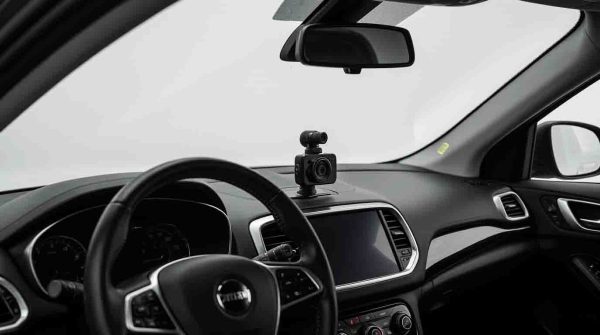
When it comes to cars, Americans in particular practice extreme brand loyalty. Those who are financially successful often want a car befitting their success; a brand that reflects their appreciation for the finer things in life. When it comes to luxury cars such as this, nothing comes close to the BMW Car.
The BMW car had its beginnings in Munich, Germany in the year 1913. The Bavarian Motors Works company (BMW) was the brainchild of Karl Friedrich Rapp who wanted to build a solid, luxury vehicle that was unsurpassed in performance. As each year passed, the BMW experienced a bevy of design changes; but the principles fundamental to the company’s reputation remained the same –superlative craftsmanship and high quality materials.
Thought of in the same class as such fine vehicles as Mercedes Benz, Porsche, and Jaguar, the BMW car speaks volumes about luxury, elegance, and comfort. It’s no wonder that its place in the industry has lasted nearly 95 years. The modern BMW car continues to project the same high-quality image and, even today, nearly a century after its inception, BMW continues to be the pinnacle of car ownership for many people.
But the BMW car is not exclusive to those with limitless budgets; with a number of designs on the market at varying prices, owning a BMW car is well within the realm of possibility for many buyers.
Today’s BMW car offers a full line of vehicles that vary in features and price – everything from the compact I series and the classic 3 series, to the luxurious 5, 6, and 7 series. The modern BMW design has even been incorporated into an SUV model – bringing convenience and comfort along with the luxury and elegance BMW customers have comes to expect.
There are some things that never go out of style. The BMW car has a classic quality that transcends time; chances are that even far off in the future the BMW car will still be one of the most desired vehicles on the road.
For easy to understand, in depth information about BMW car visit our ezGuide 2 http://bmw.ezguide2.com
Whether to buy a new car or buy a used car is often times the first decision that needs to be arrived at before you can actively begin perusing purchasing your next vehicle.
Let’s take a look at some tips, pros, and cons when it comes to making this decision.
First of all, having been in the automotive business for many years, I almost always lean toward finding a good used car that fits what I am looking for. For me, I believe that used cars offer the best value for your dollar. In most cases, you’ll find used car departments are much more used to and willing to negotiate the price that they have posted on the car. From a negotiating standpoint, most used cars won’t have all of those superfluous dealer ‘add-ons’ stuck on the window either that will just never do.
In the automotive market, used cars will most certainly come with a lower initial price tag than a comparably equipped new car. And not only will the price be lower, you may also find that so is your cost to insure the used car as well as the tags, and taxes. Depreciation being what it is; means that with a car a couple of years old, the biggest depreciation hit has already occurred. And from a tangible perspective, you may have a better chance of getting those upgrades you’d like to have on the used car that you couldn’t otherwise afford going with the new.
Yet, with all of this, buying a used car isn’t for everyone. Finding a used vehicle that fits one’s entire car buying criteria can be a tough exercise in balancing what you want with the value versus risk inherent when it comes to used cars.
Not so many years ago, reliability was a major concern when purchasing a used car… and rightfully so. Today however, reliability problems are a fraction of what they used to be. Today’s vehicles, when properly maintained will easily go for 100,000 miles and it’s not uncommon for vehicles to be motoring along as they approach 200,000 miles or more. And with all of the information now available online, the risk factor is again reduced even a bit more.
Even though more reliable today, buying a used car for people means buying a car that is probably out of its original bumper to bumper warranty. This alone, is enough to repel many potential car buyers back to the new car side of the dealership.
As you know, if you are looking at buying a used car, you are probably looking at a car that is outside the factory warranty or at least would have very little remaining. With no warranty you’ll be on the hook to pay for any needed repairs out of your own pocket. However, the biggest expense for most all cars today are the things that aren’t covered by any manufacturer’s warranty anyway; items such as brakes, tires, alignment, batteries, etc.
Of course nobody can guarantee that you won’t encounter a lemon. No matter what the make and model, no manufacturer can produce a vehicle that can withstand years of neglect and/or abuse. Always, always, always give the used car a thorough inspection both by yourself and a qualified mechanic; doing this will catch most problems that may be looming on the horizon.
When it comes to financing the purchase of a used car, you find that the going interest rates will typically be higher than new car rates. This is definitely a piece of the puzzle you’ll want to check out. There is no rule of thumb as to what the difference in the interest rate will be between the two because there are just too many determining variables involved such as; the economy, rebates and incentives involved on the new car side, your credit, length of financing, and even the type of used car you’re looking at. Be sure to crunch the numbers for both sides.
With used cars, insurance can save you some money as well because you’ll typically pay less for your insurance on a like model from a few years past. The reason is simple; less cost of replacement for the insurance company and used cars are generally not high on the stolen lists.
And finally, (the latest) safety features could be a concern if you’re looking at used car (particularly if you’re going back a few model years).
All in all, if the touch, feel, and smell of a new car, isn’t a top priority for you, I think you’ll find that a well thought out used car purchase you can get more car and features and still be within your budget.
Jeff Neilan’s car dealer experience offers insightful car buying tips that save you time and money. Be sure to visit http://www.acarbuyersguide.com for car financing tips, ownership costs, & more.
Over time, the media has elevated the popularity of various vehicles by highlighting some of the fictional rides that have graced the pages of novels, the lyrics of songs, the 30-minute TV show, and the silver screen. Whether Fred and Wilma are peddling around in their signature rockmobile, James Bond gets away with his gadget cars or the Beach Boys bring life to the Little Deuce Coupe, it’s sometimes hard to forget that many of these fictional cars really don’t exist. Below are a few examples that have gained fame throughout the years.
In both the Batman television shows and movies, the superhero-on-the-go often hopped into a sleek, customized vehicle that provided protection for his Bruce Wayne alter ego. Equipped with heavy armor plating and a high performance engine, the evolution of the Batman series displayed increasing levels of gadgets. To reach increased speeds, the Batmobile sometimes offered rocket boosts, while additional weapons and a computerized assistance helped to keep villains at a distance.
KITT
The talking car that aided David Hasselhoff’s character, Michael Knight, navigate through a sea of enemies and bad guys was a Pontiac Trans Am. The television series focused on a high-tech approach to entertain the audience. Numerous fans watched the show just to see what KITT would do or say next. The popularity of the show even helped to boost Pontiac car sales as the verbal wonder could drive without a passenger and even displayed its own set of entertaining stunts.
Christine
Stephen King has produced numerous novels that have become popular movies; the same is true with the 1958 Plymouth Fury that seemed to have a mind of its own. Christine was the name given to the car that appeared in the horror novel (with the same name) published in 1983. Driven by supernatural forces, the antique auto created havoc in both the novel and the movie.
Herbie
Several Disney movies and cartoons have focused on Herbie the Lovebug, which was a Volkswagon Beetle that made its first appearance in 1969. Just like Christine, the red, white, and blue striped car with a “53” on its side could also drive without assistance and had a reputation for acting on its own. Most of the time, the car was featured in some sort of racing competition.
General Lee
The television series and movie named the Dukes of Hazzard showed main characters, Bo and Luke Duke soaring through the air, causing mischief with their get-rich schemes. Their vehicle of choice was a colorful Dodge Charger that allowed the cousins to complete high jumps in almost every episode. The car is also known for its controversial Confederate flag decoration.
California Used Cars: http://www.norcalcars.com/ California Classifieds: http://classifieds.norcalcars.com/ Dodge Truck Comparison: http://www.norcalcars.com/DodgeTruckComparison.asp
Selling your car or truck? It’s important to keep in mind that prospective used car buyers evaluate the person selling the care almost as much, if not more, than they examine the car itself. In order to win their interest and their trust it is crucial that you should make a good impression. Wherever possible possible, strive make your prospective customers feel comfortable and be open in your response to their inquiries.
Be ready to answer their questions as soon as prospective buyers start calling. Answer questions posed over the phone honestly in an effort to prepare callers for what to expect when they see the car. This works to save both you and the customer a lot of time and work by making only those appointments that have a reasonable chance of becoming a sale. Furthermore, strive to make appointments with each customer for a specific time, rather than leaving them to some vague time such as "after work", or "Saturday afternoon".
Remember that making an appointment when selling a car increases the chances of the buyers showing up. Don’t feel obligated to wait for a late customer. To help things go smoothly, request a contact number (preferably a cell phone) and take it in stride if some prospective buyers don’t show. Cancellations, with or without notice, are simply part of the process.
It should be expected that any potential buyer will ask to test-drive the car. Ride along with them so you can answer questions, as well as ensure the safety of the automobile. There is also the possibility that the customer may not be familiar with the area, so riding along with them allows you to serve as a guide.
Some of the buyers are likely to want to have the car inspected by a mechanic. If a mechanic has already checked it, this is the right time to show that paperwork. This is a reasonable request in any transaction such as buying or selling a car.
Protect Yourself
It is important to be cautious and to take steps to ensure your safety and the safety of your interests. For example, holding onto a buyer’s driver’s license is a reasonable safeguard if a buyer insists on going on a test-drive by his or herself. If the buyer has a problem with this arrangement there’s a very good chance that allowing an unsupervised test-drive would go against your best interests. On the other hand, it’s not unreasonable for a buyer to want the car checked by a different mechanic if it has already been checked by yours. Be prepared to go with the flow a little bit, and you are more likely to get a sale.
Patricia Brown contributes to several popular web sites, especially http://great-product.com, http://www.truckparts.biz, and http://productstips.com
Since 1984 Formula One teams have been required to build the chassis in which they compete, and consequently the terms “team” and “constructor” are more or less interchangeable.
This requirement distinguishes the sport from series such as IRL, Champ Cars, and NASCAR, which allow teams to purchase chassis, and “spec series” such as GP2, which require all cars be kept to an identical specification.
In its early years, Formula One teams sometimes also built their engines, though this became less common with the increased involvement of major car manufacturers such as BMW, Mercedes-Benz, Renault, Toyota, and Honda, whose large budgets rendered privately built engines less competitive (and redundant).
Early manufacturer involvement came in the form of a “factory team” (that is, one owned and staffed by a major car company), such as those of Alfa Romeo, Ferrari (FIAT) or Renault. Companies such as Climax, Repco, Cosworth, Hart, Judd and Supertec, which had no direct team affiliation, often sold engines to teams who could not afford to manufacture them. As the manufacturers’ deep pockets and engineering ability took over, almost all engines are now produced by major manufacturers.
After having virtually disappeared by the early 1980s, factory teams made a comeback in the 1990s and 2000s, and now form half the grid with Toyota, Ferrari (FIAT), Honda, Renault and BMW either setting up their own teams or buying out existing ones. Mercedes-Benz (DaimlerChrysler) owns 40% of the McLaren team and manufactures the team’s engines. Commercial engine supplier Cosworth exited the sport at the end of 2006. Thus all the teams will run on factory supplied engines from 2007.
The sport’s 1950 debut season saw eighteen teams compete, but due to high costs many dropped out quickly. In fact, such was the scarcity of competitive cars for much of the first decade of Formula One that Formula Two cars were admitted to fill the grids. Ferrari is the only still-active team which competed in 1950, and as of 2006 eleven teams remain on the grid, each fielding two cars. Although teams rarely disclose information about their budgets, it is estimated that they range from US$66 million to US$400 million each.
Entering a new team in the Formula One World Championship requires a £25 million (about US$47 million) up-front payment to the FIA, which is then repaid to the team over the course of the season. As a consequence, constructors desiring to enter Formula One often prefer to buy an existing team: B.A.R.’s purchase of Tyrrell and Midland’s purchase of Jordan allowed both of these teams to sidestep the large deposit.
Each car is assigned a number. The previous season’s World Drivers’ Champion is designated number 1, with his teammate given number 2. Numbers are then assigned according to each team’s position in the previous season’s World Constructors’ Championship. There have been exceptions to this rule, such as in 1993 and 1994, when the current World Drivers’ Champion (Nigel Mansell and Alain Prost, respectively) was no longer competing in Formula One. In this case the drivers for the team of the previous year’s champion are given numbers 0 (Damon Hill, on both occasions) and 2 (Prost himself and Ayrton Senna - replaced after his death by David Coulthard and occasionally Nigel Mansell - respectively). The number 13 has not been used since 1974, before which it was occasionally assigned at the discretion of individual race organizers.
Before 1996, only the world championship winning driver and his team generally swapped numbers with the previous champion – the remainder held their numbers from prior years, as they had been originally set at the start of the 1974 season. For many years, for example, Ferrari held numbers 27 & 28, regardless of their finishing position in the world championship. As privateer teams quickly folded in the early 1990s, numbers were frequently shuffled around, until the current system was adopted in 1996.
Michael Schumacher holds the record for having won the most Drivers’ Championships (seven) and Ferrari holds the record for having won the most Constructors’ Championships (fourteen). Jochen Rindt became the only posthumous World Champion after a fatal accident at the 1970 Italian Grand Prix.
Billy Bond’s website brings you all the latest Formula One news, updated several times a day. http://www.f1dailynews.com
Carbon fiber motorcycle helmets are one of the most modern helmets around. The carbon fiber material used in motorcycle helmets refer to carbon filament threads woven into cloth or felt. It can also be a composite material made from carbon filaments that make up the protective shell of your helmet. This material can also be combined with another material such as Kevlar in the manufacture of stronger and lighter helmet models.
Carbon fibers in helmets are made by superheating an acrylic fiber that results to better strength and stiffness to weight properties. Carbon fiber composites can achieve the strength of metals at a significant savings in weight, the two factors needed in making quality motorcycle helmets.
Kevlar is created by dissolving a polymer in a solvent and then extracting the fibers and then spinned to form threads. Although Kevlar has properties that are similar to carbon fiber, it lacks compressive strength. By combining carbon fiber and Kevlar, one can get a laminate that has three times the flexural strength than that of Kevlar alone.
Carbon fiber motorcycle helmets provide a lighter yet more durable helmet than most motorcycle helmets today made from fiberglass. With carbon fiber motorcycle helmets, it is now possible to make more compact motorcycle helmets that are lighter and less bulky.
Most carbon fiber helmets are available for you from custom helmet manufacturers. But there are other manufacturers now beginning to make motorcycle helmets out of this extremely useful material. With it, motorcycle helmets become lighter, stronger and cooler.
There are now carbon fiber motorcycle helmets such as the THH T-69 that offers you a DOT approved motorcycle helmet. Its smaller shell design helps in making it ever the popular choice with most riders today. There is also the HJC AC-12 full face carbon fiber helmet that incorporates racer tested features for use by the ordinary motorcycle rider on the road.
It has features such as the Flow Through ACS Advanced Channeling Ventilation Feature System that provides extraordinary ventilation to make you feel cooler. It also makes use of an Anti-fog System to provide you with a clear view even in the coldest of days. This motorcycle helmet also has a built-in communication system speaker cavity to allow two-way or multi-channel communication when required.
With today’s technology, motorcycle helmets have evolved to provide you with better protection and a more comfortable riding experience. With all the choices now available for you, you would surely have that helmet that would work for you.
This content is provided by Low Jeremy. It may be used only in its entirety with all links included. For more information on Motorcycle Helmets & other useful information, please visit http://motorcycle-helmet.articlekeep.com
Yamaha YZF-R1 is a natural born land rocket by combining the technology from the race track with a great design compare to other super bikes in the same category. It is quite a while since it first appearance but from its unique performance in every aspect makes the YZF-R1 still in most bikers mind.
Foe anyone who owns this R-1, you don’t have to be worry that your model will fade through time because the Yamaha has made a great design for it. As time goes by this bike still be trendy and even for the minor change they never miss every little detail. If you look at the minor change it looks a lot like the old model but actually more than 200 parts are change. Specially the body parts, it may look alike but the Yamaha has to redesign it and test the arrow dynamic force to find the best model that will has the least wind resistant. The front mirror angle is reducing by few degrees. The front head light is uniquely redesign and added the air duct ability to help cool down the intercooler and the engine itself. For the back mirror, the size was longer and moves the position higher for better seeing. Other than what they mention above, the overall weight is also reduced by 2 kilograms.
The frame is the newly develop frame from Yamaha under the name of Delta-Box II and used in the first time in the R-1 and later used in the R-7 which is the best super bike of the year. The new frame is lighter, stronger than and not as big as the earlier one.
The new engine technology that is used in this monster is lighter but more powerful. It is a 4 cylinder Double Overhead Camshaft engine uses the Genesis 4 step technology 998 cc. The cylinder diameter is 74 millimeter and the pull length is 58 millimeters and the compression ratio is 11.8:1. It produces 150 horsepower at 10,000 rounds per minute with the torque 11.0 kilogram-meters at 8,500 rounds per minute equipped with a six speed manual transmission. The gear plate is small and changes the ratio for 1st gear to close to 2nd gear. The cylinders use the ELEC-TROPLATING technology to reduce the occurred friction and also helps cool down the temperature. The fuel injection they use is from Mikuni 40 millimeters with a special system that will transfer the data to the ECU. The fuel rail is bigger. The start motor is smaller and shorter by 12 millimeters. The valve cover is made from magnesium for lighter weight. The muffler was redesign and the muffler tip is made from titanium.
The last change is the fuel tank. Yamaha has removed a support from the end of the tank and reduced the size by 5 millimeters which gives the comfortable feeling while you are riding it. The overall design is impressive and creates the modern look.
Varon Sanornoi is the internet freelance writer. If you want to find a car dealership in Washington DC,please go to http://www.dc-cc.org
High performance and low cost were Plymouth’s design goals for a brand-new model in 1968. The company believed that the time was right for a factory hot rod for the youth market, and its guess was right on the money. It would have the macho name of Road Runner.
It was also a very “B Body” budget-friendly machine which made it another very important reason for purchasing. The high cost ruled out many of the muscle cars of the era.
Less money meant less chrome on the body, along with fewer options. In fact, those that intended their Road Runner for the drag strip sometimes ordered the Runner with the small hub-cap-style wheel covers and even deleted the radio.
A member of the Belvedere line, the new model came with a stock 383cid engine capable of 335 horsepower. But that was just the beginning, the awesome 426 Hemi and 440 Six-Barrel engines would become available the following model year.
Of course, the Hemi has been a legend for many years, but that triple-carbed 440 engine had adopted a cult following of its own. A significant body change had been planned for the ‘70 model, but that would be put off until the 1971 model year.
The 1970 440 continued to be capable of 390 horsepower when equipped with the so-called Air Grabber induction system. That interesting system provided a solid connection between the hood scoops and engine once the hood was closed. The sides of the pop-up Air Grabber door were eye-catching with evil-looking shark’s teeth etched on the sides.
The front end was menacing-looking with the blackout grille containing twin headlights mounted in its ends. The aggressive bumper contained a pair of round parking lights on either side of the license plate.
When looking at the ‘70 Road Runner, and comparing it with the other garnish MOPAR muscle machines of the era, it appeared downright stripped. Oh, there was a stripe and 440+6 lettering on the hood, but that was about it. About the only eye catcher was the simulated rear-fender-scoop cut-out.
Some of the models did, however, have a dust trail that reached from near the front of the front fender and disappeared into that scoop.
The only sizable name identification externally was the “Road Runner” lettering contained in a stripe located on the rear end of the car, just above the tail lights. As far as engine identification, in addition to the aforementioned 440+6 designations on the hood, there was also a “440” in the rear of a hood bulge.
With that famous name, the company made the most of it with a special horn to sound like that famous cartoon bird. The horn made the Road Runner ‘Beep Beep’ sound which was unmistakable.
Mike Cenky of Huber Heights, Ohio owns this ‘70 Road Runner hardtop with such an six-barrel 440 engine installation. A retired phone company employee, Mike acquired the four-speed model in 1988 in “fair condition.” I redid the powertrain and suspension system which both needed attention.”
As he was restoring the Road Runner, Mike came across some interesting clues that provided firm indications of the car’s early history. “The engine had a scatter shield, there was an indication of once having a drag-style line-lock set-up, and the rear wheelwells had been trimmed for large racing slicks.
“I bet that it made many runs down the drag strip during those days.” He indicated, though, that type of activity is not in his plans for the orange beauty. “Oh, I might get on it once-in-awhile, but that’s about it!”
Cenky did, however, make several minor changes for better driving comfort. “I used a wider eight-inch rear wheel. Then too, I changed the factory 4.10 ratio rear end to a 3.54 unit which makes the car much more streetable.” For a cleaner look, the small Road Runner decals-normally on the front quarters-and small chrome RR emblems on the rear quarters.
The car is coated in a flashy Tor Red color, a color which is carried to the exposed wheels which carry the small wheel covers, and in MOPAR style, also into the engine compartment. It’s highlighted with that broad black hood stripe which contains the hood scoop and is outlined by two narrow stripes. There is definitely a racecar look about this stunning machine.
The car also carries the Super Track Pack which included front disc brakes, heavy duty cooling package, special cooling fan, and the Dana rear end. The interior is done in black vinyl and sports bucket seats.
Cenky explained that even though the car is 36 years old, most people at car shows know exactly what it is. “I am always hearing from them that they owned one or knew somebody that did,” he explained. Mike’s long been a Chrysler fan, and it comes naturally. “My dad worked for the company for many years and all we ever had were Chrysler cars.” And over the years,
Mike has owned a number of vintage performance MOPARs, including a ‘67 440 R/T, a ‘70 Dodge Challenger 440 Six-Pack, a ‘72 340 Plymouth Duster, and a ‘70 Chrysler 300.
There is no mistaking the look of those Chrysler-built ‘60s and early muscle machines, and they are certainly a favorite of mine.”
And ours too!
Copyright © 2005-2006 Muscle car News Magazine Privacy Policy
Bill Holder has been a freelance journalist for four decades, Bill has written countless articles on automotive subjects. Bill’s work has appeared in Muscle Car News magazine. http://www.mcnmagazine.com
High performance and low cost were Plymouth’s design goals for a brand-new model in 1968. The company believed that the time was right for a factory hot rod for the youth market, and its guess was right on the money. It would have the macho name of Road Runner.
It was also a very “B Body” budget-friendly machine which made it another very important reason for purchasing. The high cost ruled out many of the muscle cars of the era.
Less money meant less chrome on the body, along with fewer options. In fact, those that intended their Road Runner for the drag strip sometimes ordered the Runner with the small hub-cap-style wheel covers and even deleted the radio.
A member of the Belvedere line, the new model came with a stock 383cid engine capable of 335 horsepower. But that was just the beginning, the awesome 426 Hemi and 440 Six-Barrel engines would become available the following model year.
Of course, the Hemi has been a legend for many years, but that triple-carbed 440 engine had adopted a cult following of its own. A significant body change had been planned for the ‘70 model, but that would be put off until the 1971 model year.
The 1970 440 continued to be capable of 390 horsepower when equipped with the so-called Air Grabber induction system. That interesting system provided a solid connection between the hood scoops and engine once the hood was closed. The sides of the pop-up Air Grabber door were eye-catching with evil-looking shark’s teeth etched on the sides.
The front end was menacing-looking with the blackout grille containing twin headlights mounted in its ends. The aggressive bumper contained a pair of round parking lights on either side of the license plate.
When looking at the ‘70 Road Runner, and comparing it with the other garnish MOPAR muscle machines of the era, it appeared downright stripped. Oh, there was a stripe and 440+6 lettering on the hood, but that was about it. About the only eye catcher was the simulated rear-fender-scoop cut-out.
Some of the models did, however, have a dust trail that reached from near the front of the front fender and disappeared into that scoop.
The only sizable name identification externally was the “Road Runner” lettering contained in a stripe located on the rear end of the car, just above the tail lights. As far as engine identification, in addition to the aforementioned 440+6 designations on the hood, there was also a “440” in the rear of a hood bulge.
With that famous name, the company made the most of it with a special horn to sound like that famous cartoon bird. The horn made the Road Runner ‘Beep Beep’ sound which was unmistakable.
Mike Cenky of Huber Heights, Ohio owns this ‘70 Road Runner hardtop with such an six-barrel 440 engine installation. A retired phone company employee, Mike acquired the four-speed model in 1988 in “fair condition.” I redid the powertrain and suspension system which both needed attention.”
As he was restoring the Road Runner, Mike came across some interesting clues that provided firm indications of the car’s early history. “The engine had a scatter shield, there was an indication of once having a drag-style line-lock set-up, and the rear wheelwells had been trimmed for large racing slicks.
“I bet that it made many runs down the drag strip during those days.” He indicated, though, that type of activity is not in his plans for the orange beauty. “Oh, I might get on it once-in-awhile, but that’s about it!”
Cenky did, however, make several minor changes for better driving comfort. “I used a wider eight-inch rear wheel. Then too, I changed the factory 4.10 ratio rear end to a 3.54 unit which makes the car much more streetable.” For a cleaner look, the small Road Runner decals-normally on the front quarters-and small chrome RR emblems on the rear quarters.
The car is coated in a flashy Tor Red color, a color which is carried to the exposed wheels which carry the small wheel covers, and in MOPAR style, also into the engine compartment. It’s highlighted with that broad black hood stripe which contains the hood scoop and is outlined by two narrow stripes. There is definitely a racecar look about this stunning machine.
The car also carries the Super Track Pack which included front disc brakes, heavy duty cooling package, special cooling fan, and the Dana rear end. The interior is done in black vinyl and sports bucket seats.
Cenky explained that even though the car is 36 years old, most people at car shows know exactly what it is. “I am always hearing from them that they owned one or knew somebody that did,” he explained. Mike’s long been a Chrysler fan, and it comes naturally. “My dad worked for the company for many years and all we ever had were Chrysler cars.” And over the years,
Mike has owned a number of vintage performance MOPARs, including a ‘67 440 R/T, a ‘70 Dodge Challenger 440 Six-Pack, a ‘72 340 Plymouth Duster, and a ‘70 Chrysler 300.
There is no mistaking the look of those Chrysler-built ‘60s and early muscle machines, and they are certainly a favorite of mine.”
And ours too!
Copyright © 2005-2006 Muscle car News Magazine Privacy Policy
Bill Holder has been a freelance journalist for four decades, Bill has written countless articles on automotive subjects. Bill’s work has appeared in Muscle Car News magazine. http://www.mcnmagazine.com
In today’s world the car has become a necessity since long ago. It’s not just used for sports or as a hobby, people use it for every day life and for all kind of things and activities. Think about it a little.
You probably can’t even imagine your life without the car. When people go to work or to the supermarket they use their cars. Cars are being used for everything that people do. Unfortunately for some of us, a car doesn’t come for free. But there are also some good news.
If you ever wanted to buy a car but didn’t have enough funds to do so, you should know that there are places where you can have a car for a relative small amount of money. One of these places is the car tech auto auction. From a car tech auto auction you can have a car that isn’t new, but with whom you will be able to do your work.
What is the Car Tech Auto Auction about?
The car tech auto auction usually deals with used vehicles that are being salvaged and afterwards resold. The car tech auto auction is usually a great deal for both the buyer and the dealer. From such an auction people can have their cars for a very reasonable price, cars that they may never afford to buy them new or from another place.
>From the car tech auto auction people can leave with their dream car and still have some money left in their pockets. This is actually the main idea of this type of car auction: a place where people can come and buy a car without having to spend big. And we aren’t talking here about some rag, we’re talking about a car that can really be driven. It may not be new, but with a little luck you can even find cars with only a few thousand miles, and this means that they are almost new.
The car tech auto auction is the perfect place where you can buy a car for your child or even for you, if you don’t have enough money to buy a new one.
Although they have enough money to buy a new car, some people still buy them from these kind of auctions because they trust in the quality of the services that they offer and in the cars that are being sold here. After all, regardless of how much money you have, you don’t just want to waste them on things that you can have for a much less sum, don’t you agree?
If you are in the markey for a used cvar you should check out http://www.reviewcarauctions.com